


By interpreting the results through trend analysis, industry benchmarks, profitability assessments, risk evaluations, and more, you can make informed judgments about a company’s financial health and prospects. The beauty of vertical analysis is that it allows you to view a company’s financial data through multiple lenses, offering a more comprehensive understanding of its financial health and potential. Common size financial statements are a direct application of vertical analysis. All items in the income statement are expressed as a percentage of sales, and all items in the balance sheet are expressed as a percentage of total assets. This allows for easy comparisons between periods and among companies of different sizes.
- We started with case law search, then added legislation, then legal news, then alerts, then document analysis.
- The accounts receivable automation market in Europe is growing due to the region’s digital transformation initiatives and the need to enhance financial operations.
- It enables a company to stay agile, responsive, and competitive in a dynamic business environment.
- This could prompt management to reevaluate their marketing strategy or cost structure to enhance profitability.
- Modern FP&A platforms can automate these calculations, ensuring accuracy while freeing up time for actual analysis rather than data manipulation.
Vertical Analysis of Financial Statements CMA Questions
- For instance, if a company’s cost of goods sold (COGS) is 40% of its total revenue, this indicates that 40 cents of every dollar earned go toward producing goods or services.
- Say goodbye to the hassle of building a financial model from scratch and get started right away with one of our premium templates.
- This data was collected over decades, often through exclusive relationships.
- The parsing infrastructure that took Doctrine years to build is now a commodity capability that comes free with the model.
- This allows stakeholders to easily compare the financial performance of a company over different periods or against industry benchmarks.
- Its important to use Vertical Analysis alongside other analytical methods to avoid misleading conclusions.
Vertical analysis is used to demonstrate cost control and profit trends when used on the income statement. It aids in the comparison of one company with another, irrespective of whether both are of the same size or not. If you use percentages, you can compare a company with ₹10 crore in sales and a company with ₹10 lakh in sales.
- Consistent changes in the percentages of specific line items can reveal underlying shifts in business operations or market conditions.
- Vertical Analysis is a method that expresses each line item in a financial statement as a percentage of a base figure, such as total sales on an income statement or total assets on a balance sheet.
- What makes vertical analysis stand out from other financial and profitability analysis methods is its emphasis on relative relationships.
- By expressing each line item as a percentage of a common base, it offers insights into a company’s cost structure, operational efficiency, and historical trends.
- By integrating vertical analysis into cash flow forecasting, businesses can gain a clearer picture of their financial trajectory, allowing for more informed decision-making and strategic planning.
- When a company releases these types of financial statements with vertical analysis, they are often referred to as common-size financial statements.
- Watch this short video to quickly understand the twelve different types of financial analysis covered in this guide.
Use PLANERGY to manage purchasing and accounts payable
These companies benefit from the asymmetry between the cost of staying (high fees) and the cost of leaving (potential data loss, operational disruption). Some vertical software companies own or license data that doesn’t exist vertical analysis anywhere else. This data was collected over decades, often through exclusive relationships.

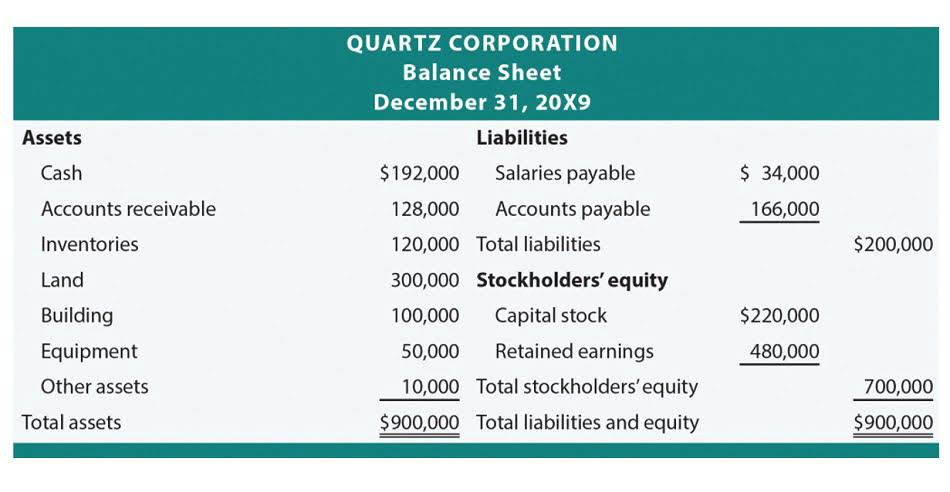
Vertical Analysis of Balance Sheet
Write each percentage result, enclosing negative amounts in parentheses, next to each respective dollar amount in the column to the right of the prior period’s dollar amounts. This shows the vertical and comparative analysis of the cash flow statements from the two periods. This analysis involves using various metrics and methods to assess profitability, liquidity, solvency, and efficiency, helping stakeholders make informed decisions about the financial status of a company. Each cash flow category can be expressed as a percentage of total cash flow or operating cash flow. While vertical analysis remains a cornerstone of financial analysis, the manual process of calculating percentages and creating formatted reports can be time-consuming and error-prone. Finance teams spending hours in spreadsheets often struggle to perform this analysis https://wptest.24livehost.com/american-rooter-drain-hiring-full-charge/ consistently across periods or to integrate it with other planning activities.
Liquidity Measures: Liquidity Unlocked: Vertical Analysis for Better Cash Flow
Such a breakdown helps decision-makers assess liquidity, debt levels, and overall financial stability, guiding strategic decisions regarding capital structure and risk management. According to a recent report by the Corporate Finance Institute, AI-driven tools have significantly improved the efficiency and accuracy of vertical analysis. Thus, vertical analysis is a financial analysis https://www.bookstime.com/ technique where each item in a financial statement is expressed as a percentage of a base figure. This allows standardized comparisons across periods or between companies of varying sizes. Vertical analysis is a powerful tool in financial analysis, enabling the comparison of different components of a financial statement through ratios. This technique is particularly common for examining how company expenses relate to revenue.
- It breaks down complex financial statements into easily digestible percentages, facilitating quick assessments of financial health and operational efficiency.
- A customer says “alert me when any company in my portfolio mentions tariff risk in an earnings call” and it just works.
- However, it is important to consider vertical analysis in conjunction with other financial analysis techniques and external factors for a comprehensive assessment of a company’s financial position.
- “Show me all software companies with over $1B market cap, P/E under 30, and revenue growing over 20% year over year. Build a DCF model for the top 5. Run sensitivity analysis on discount rate and terminal growth.”
- It shows how revenue turns into profit after the costs to make and sell products, the overhead of running a business, and the financing and tax effects.